Resources Guide for Brave New Wonders
Stabilize ore, crystal, sand-to-glass, water, fusion cells, and research packs — then haul them with signals instead of belts.
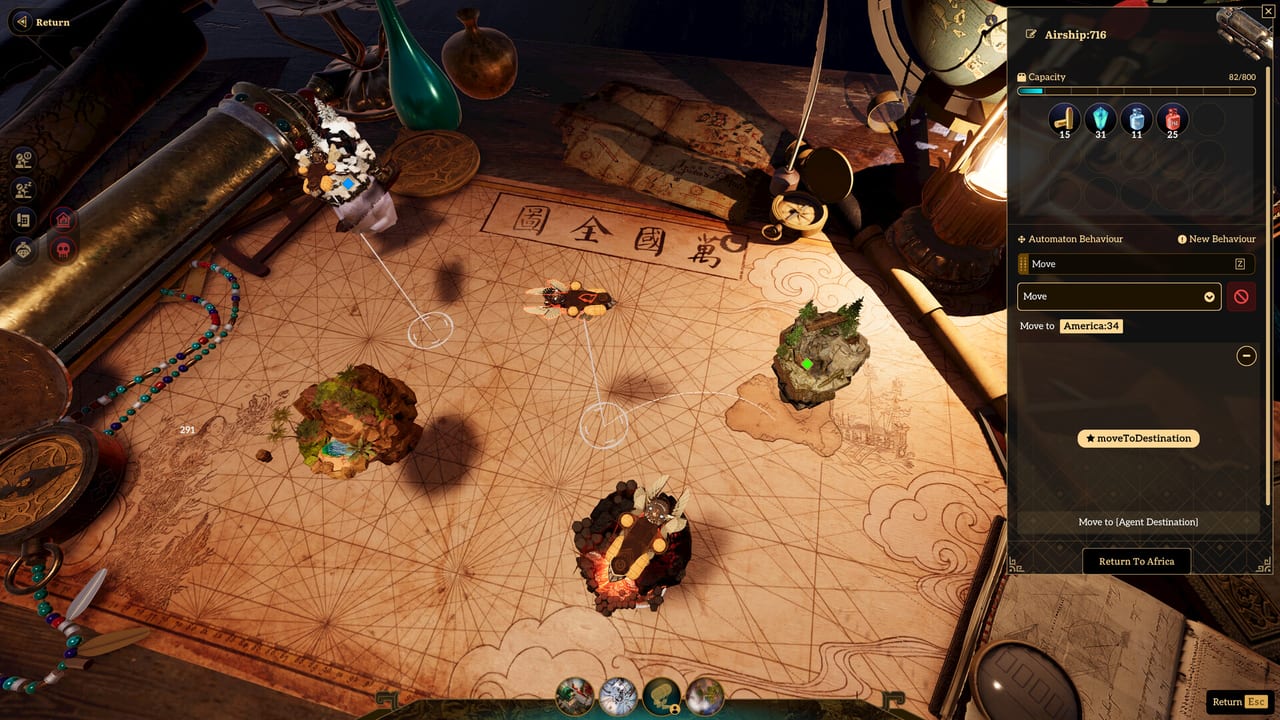
Resource flow is the quiet backbone of Brave New Wonders. Without conveyor belts, every plate, glass pane, fusion cell, and research pack moves because a Miner or Mover was told to move it. This guide maps early and mid production chains, how to staff them, and how to deliver research packs without starving the rest of the island.
Start from Getting Started if you do not yet have a reliable mine-and-deposit loop. Pair this page with Text Commands for clearer item verbs, Automation for cell design, and Blueprints once a chain deserves cloning.
The early production stack
On the Americas opening island, prioritize chains that unlock options rather than vanity stockpiles:
- Ore — structural and machine crafting foundation.
- Crystal — advanced components; deserves its own haul path early.
- Sand to glass — bulk sand eats Mover time; under-staffing here stalls building.
- Water — easy to forget until a recipe pauses mid-push.
- Metal plates and refined crystals — intermediate products that should sit in labeled buffers.
- Fusion cells — treat power logistics as a first-class product.
- Research packs / industry research packs — scheduled deliveries to the research hub, not leftover chores.
Each line should have an owner behaviour set. Avoid one heroic Mover that “does everything somewhere.” Heroic Movers do not clone cleanly and will not survive a paste to Europe or Africa.
Ore and crystal mining
Ore nodes are your first trust exercise. Use a preset Miner behaviour, then rewrite it in your own words and diff the graph (Text Commands). Name the deposit (OreBuffer_A) so later glass or plate recipes can share language with blueprints.
Crystal often gates progress while looking optional. Give crystal:
- A dedicated Miner or a clearly prioritized dual-role Miner
- A short Mover route that does not cross the main ore corner
- A buffer that signals green when a batch is ready and yellow when full
If ore and crystal share one chaotic pad, you will invent shortages that are really pathing fights. Split interfaces early; blueprint the winners (Blueprints).
Sand, glass, and bulk handling
Sand-to-glass is the classic Brave New Wonders time sink. Sand is bulky, glass is precious, and Movers spend surprising minutes on the sand leg. Practical habits:
- Place sand intake close to the glass buildings; do not scenic-route across the whole yard.
- Staff more Movers on sand than on refined glass until throughput balances.
- Use colored signals so glass producers pulse when they need sand, instead of busy-loop hauling (Signals).
- Keep a small glass buffer for construction spikes so research and defense crafts do not steal the last pane mid-raid.
When the cell is stable, save GlassCell_v1 and paste twins instead of stretching one mega-line. Parallel twins lift more cleanly with the airship Wonder later (Wonders).
Water and irrigation thinking
Water is the resource players forget until a smelter or food-adjacent recipe stalls. Treat water like a utility product:
- One clear source interface and one labeled storage
- Behaviours that mention water explicitly — never “fluids” or “stuff”
- A signal that pauses Miners or secondary crafts when water is critically low
- Enough Mover coverage that a combat stutter does not dry out the whole base
Irrigation-style layouts still matter even when you are thinking in factories: short paths, local buffers, and honest names beat a single distant tank everyone races toward.
Fusion cells and power as a product
Fusion cells and related power logistics deserve a cell of their own before you chase exotic side chains. Power that “mostly works” will fail the moment you paste three glass twins and a turret ring. Design fusion-aware logistics to:
- Attach at the edge of production blueprints
- Expose a pickup contract Movers from other cells can trust
- Survive old-machine raids without every hauler pathing through dynamite lanes (Defense)
Rank which power and haul presets deserve early investment on the Tier List Hub once you have live samples.
Metal plates, refined crystals, and intermediates
Intermediates are where beltless factories either become readable or become folklore. Metal plates and refined crystals should live in named buffers with signal contracts:
- Producers deposit only to their buffer
- Downstream crafters wait on the correct colour before pickup
- Overflow goes to a secondary storage, not into random floor piles
Document the colour legend next to the blueprint name. When two pasted cells disagree on what green means, you create bugs that look like parser failures but are dialect clashes (Signals, Automation).
Research packs and hub delivery
Research packs and industry research packs are not spare ore. Schedule them:
- Craft packs in a quiet corner with its own input buffers.
- Assign a specialist Mover whose job is hub delivery, not “help wherever.”
- Gate departures on a signal that the research hub is ready to receive.
- Keep a small pack stockpile so a raid does not freeze the tech tree for an hour.
- After patches, re-test pack routes — follow Updates.
Never let pack delivery share a wartime retreat behaviour with ammo haulers unless you intentionally swap jobs. Mixed brains are how research stalls while everyone “helps” the turret line.
Island and biome shifts
Americas teaches the grammar. Europe, Asia, and Africa change the nouns: different node spacing, heat, and combat pressure (Islands). Before the Sky Pillar airship lift:
- Externalize island-unique resource IDs behind local labels
- Keep sand, water, and fusion attachments at blueprint edges
- Strip spawn-rock wording from behaviours
- Plan which resource cells travel first versus which you rebuild on site (Wonders)
Desert-leaning biomes punish lazy sand and water staffing. Bring twin glass cells and honest irrigation buffers, not a single heroic route.
Failure modes
Full mines, empty furnaces. Missing signal waits or Movers still bound to old deposits.
Glass starvation with busy sand haulers. Too few Movers on sand, or producers not pulsing demand.
Random research pauses. Pack Mover inherited a combat retreat or shared a congested corner with ore traffic.
Post-lift breakage. Absolute labels and Americas-only paths. Rewrite before the next voyage.
Clone storms. You duplicated a half-finished haul. Delete clones, fix source, re-clone (Blueprints).
Practical session plan
Hour 1–2: ore cell, shared water, minimal crystal path, basic turrets. Hour 3–5: sand-to-glass twins, plate and refined-crystal buffers, signal legend locked. Pre-Pillar: fusion-aware power cell, dedicated research-pack courier, blueprint library with versions. Post-Wonder: biome kits — bulk ore modules, desert glass/water kits, combat-aware fusion edges.
Use Controls habits to speed selection while tuning routes, check System Requirements if large fleets stutter, and keep helpers on the Tools Hub. Official references live on the Links Hub and roster framing on the Players Hub. Return to the Guides Hub for the full map of sibling pages.
Related guides
- Automation — modular cells without belts
- Blueprints — copy chains that already work
- Signals — colour contracts for pickups and pauses
- Text Commands — name items and endpoints clearly
- Defense — keep haulers alive near relics and turrets
- Islands — adapt resource kits per biome
Stabilize resources early. In Brave New Wonders, every Wonder voyage and every turret volley is downstream of ore, crystal, glass, water, fusion cells, and research packs that arrive on time.
Frequently Asked Questions
Quick answers to the most common Pioneer questions.
Which resources should I automate first in Brave New Wonders?
Stabilize ore, crystal, sand-to-glass, water, and early fusion or power logistics before exotic side chains. Add dedicated research-pack delivery once those loops are trustworthy.
Why does sand-to-glass stall even when sand nodes look fine?
Sand is bulky and often under-staffed. Add Movers on the sand leg, shorten paths, and use signals so glass buildings request sand instead of constant busy-loop hauling.
How should I deliver research packs to the hub?
Use a specialist Mover, labeled pack buffers, and a receive-ready signal at the research hub. Do not share that brain with wartime ammo routes unless you intentionally swap jobs.
Do metal plates and refined crystals need their own buffers?
Yes. Named intermediate buffers with clear signal contracts keep downstream crafters from fighting over floor piles and make blueprints readable after paste.
What changes when I move resource cells to other islands?
Keep local labels and edge attachments for water, sand, and fusion logistics. Strip Americas-only wording before the Sky Pillar airship Wonder carries modules to Europe, Asia, or Africa.